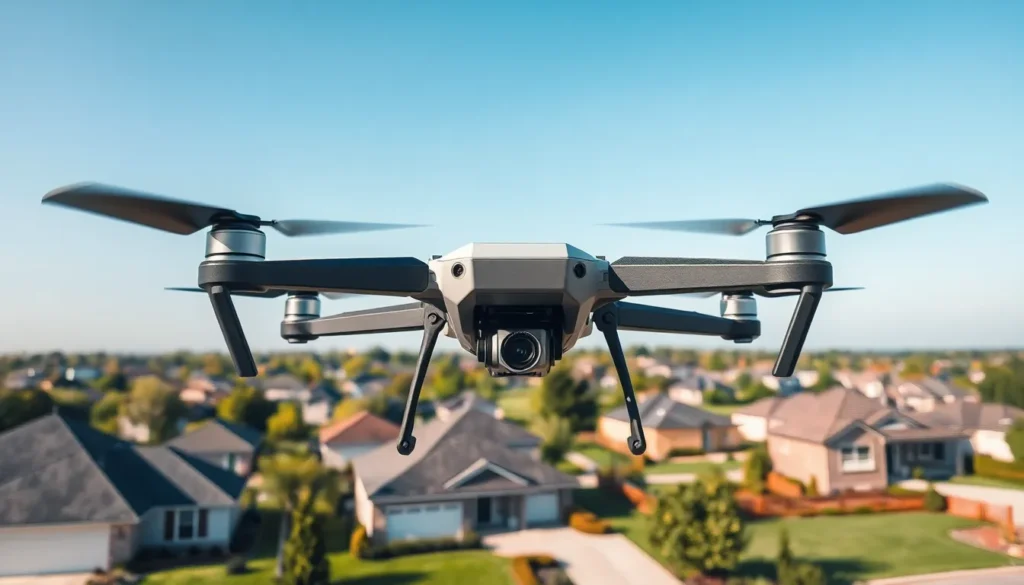

In a world where the only thing scarier than a surprise visit from the in-laws is a security breach, security drones are swooping in to save the day. These high-tech marvels aren’t just for military missions or delivering pizza anymore; they’re becoming the trusty sidekicks of homeowners and businesses alike. Imagine a watchful eye in the sky that never blinks or takes a coffee break.
With the ability to patrol properties and provide real-time surveillance, security drones are like having a superhero on standby—minus the cape. They’re equipped with cutting-edge technology, making it harder for intruders to sneak past unnoticed. As crime rates fluctuate and safety becomes a top priority, these flying guardians are proving that sometimes, the best defense really is a good offense. So buckle up and prepare to explore how security drones are transforming the way we protect our spaces.
Overview of Security Drones
Security drones serve as advanced tools for surveillance and property safety. They enhance security measures in homes and businesses, responding to the growing demand for effective protection.
Definition and Purpose
Security drones refer to unmanned aerial vehicles equipped with cameras and sensors designed for surveillance and monitoring tasks. Their primary purpose involves providing real-time data to security personnel, enabling quick responses to potential threats. Equipped with features like night vision and thermal imaging, these drones offer round-the-clock monitoring capabilities. They assist in reducing security costs while improving situational awareness. Implementing security drones contributes to minimizing response times during incidents, ensuring a proactive approach to safety.
Types of Security Drones
Different types of security drones suit various monitoring needs and environments. Fixed-wing drones offer long flight times and cover expansive areas, making them ideal for vast properties. Multi-rotor drones excel in maneuverability and stability, frequently used for urban surveillance. Hybrid drones combine features of both types, enabling versatility in diverse situations. Additionally, tethered drones provide continuous power supply, facilitating prolonged surveillance without needing frequent recharges. Understanding these types aids organizations in selecting the best drone for specific security objectives.
Benefits of Using Security Drones
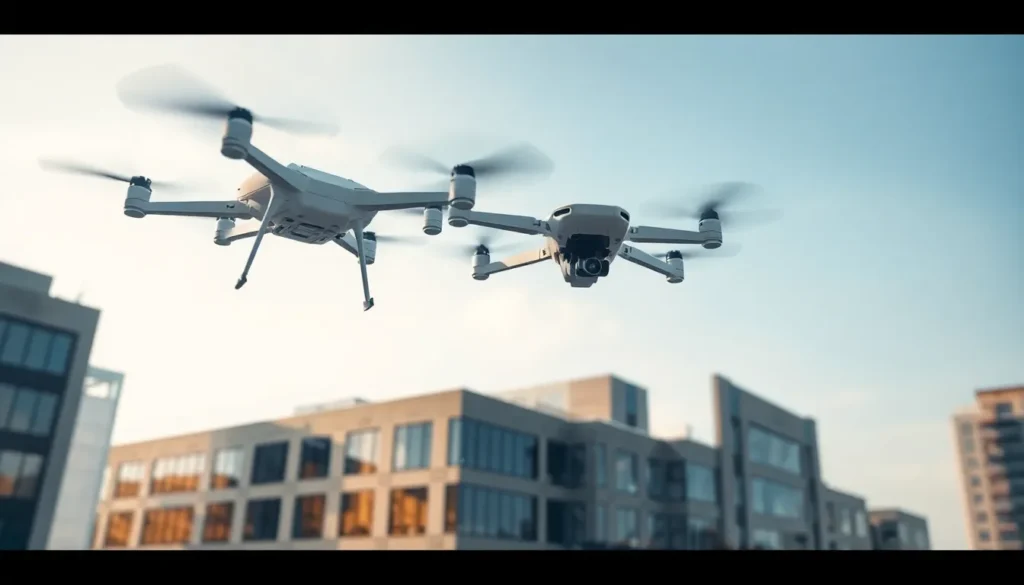
Security drones offer multiple advantages for safeguarding homes and businesses. Their advanced technology enhances security measures, making them a valuable asset for any surveillance strategy.
Enhanced Surveillance Capabilities
Enhanced surveillance capabilities represent a key benefit of security drones. Equipped with high-definition cameras and sophisticated sensors, these devices provide real-time video feeds and data analysis. Night vision and thermal imaging functionalities allow for effective monitoring in challenging conditions. Drones can cover larger areas than traditional security personnel, reducing blind spots considerably. By utilizing automated flight paths, they ensure thorough inspections of various locations. This increased situational awareness leads to rapid identification of potential threats, enhancing overall security effectiveness.
Cost-Effectiveness
Cost-effectiveness serves as another compelling reason to adopt security drones. Deploying these drones often reduces the need for extensive human security teams. Lower personnel costs lead to significant savings for organizations. Automation streamlines monitoring processes, allowing for quicker responses at a reduced operational cost. Regular maintenance expenses for drones are often lower than those associated with continuous human supervision. Implementing security drones means investing in long-term savings, while providing robust security solutions that do not compromise safety. Efficient use of resources creates a strong case for incorporating drones into security planning.
Applications of Security Drones
Security drones serve multiple applications across various sectors. Their versatility makes them valuable assets for both commercial and public safety initiatives.
Commercial Security
In commercial settings, security drones enhance surveillance capabilities significantly. Equipped with high-definition cameras, they monitor large retail spaces, warehouses, and construction sites effectively. Using real-time feeds, security teams can quickly identify potential risks, reducing response times to incidents. Increased operational efficiency stems from their ability to cover vast areas without the need for additional personnel. Moreover, their integration into existing security systems boosts the overall effectiveness of safety protocols within businesses. Recent studies show a noticeable decrease in theft and unauthorized access due to drone surveillance.
Public Safety
Security drones play a crucial role in public safety initiatives. During large events or emergencies, they provide aerial views that help law enforcement assess situations quickly. Authorities use drones to monitor crowds and detect unusual behavior, which enhances risk management strategies. Implementation of these devices has been instrumental during natural disasters, as they assist in search and rescue operations, delivering real-time information about affected zones. Additionally, drones can deploy lifesaving supplies to hard-to-reach areas swiftly, demonstrating their critical function in crisis situations. Various municipalities have already adopted drone technology, improving community safety levels substantially.
Challenges and Concerns
Security drones face several challenges and concerns that impact their implementation and acceptance. Understanding these factors helps stakeholders navigate potential issues effectively.
Privacy Issues
Privacy remains a significant concern regarding security drones. Citizens often worry about surveillance capabilities infringing on personal privacy. Drones equipped with cameras can capture images and videos of individuals without consent, leading to potential legal and ethical dilemmas. Data collection practices need careful examination, particularly regarding storage and sharing of surveillance footage. Striking a balance between safety and privacy becomes essential to promote public acceptance of security drones in various environments.
Regulatory Hurdles
Regulatory hurdles pose additional challenges for security drones. Various jurisdictions impose strict guidelines for drone operations, affecting their deployment for security purposes. Requirements may include obtaining permits, adhering to flight altitude restrictions, and ensuring compliance with airspace regulations. These rules can slow down the integration of drones into security systems, often leading to frustration among security providers. Encouraging collaboration between regulators and industry stakeholders could lead to clearer guidelines and a more streamlined approach to drone usage in security applications.
Security drones are transforming the landscape of safety and surveillance. Their ability to provide real-time data and monitor vast areas makes them indispensable for businesses and communities alike. As technology continues to evolve the benefits of these drones will only increase.
While challenges such as privacy concerns and regulatory hurdles remain, collaboration between industry stakeholders and regulators can pave the way for effective solutions. By embracing security drones organizations can enhance their safety measures while optimizing costs. The future of security lies in the skies with these innovative tools ready to protect and serve.