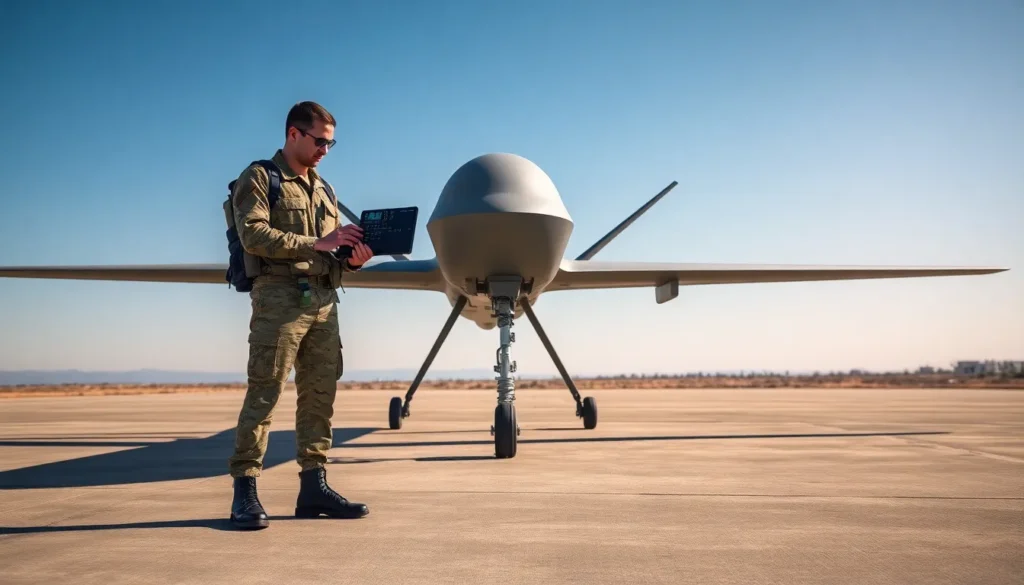

When it comes to military drones, size really does matter—but not in the way you might think. These flying marvels come in all shapes and sizes, from the tiny ones that could fit in your backpack to the massive behemoths that could easily double as a small aircraft. Imagine a flying robot that’s both your wingman and a surveillance expert, all while being the size of your average car. Talk about multitasking!
Overview of Military Drones
Military drones come in various sizes and serve multiple purposes in modern warfare. Small drones, often referred to as micro or mini drones, typically weigh less than 20 pounds. These compact models excel at reconnaissance and intelligence-gathering tasks, allowing for easy transport and deployment.
Medium-sized drones, like the MQ-1 Predator, can weigh around 2,250 pounds. They often engage in surveillance and can carry weapons, providing tactical support during missions. Their extended flight times and sensor capabilities enhance situational awareness in operational theaters.
Large drones, such as the MQ-9 Reaper, resemble small aircraft and can span over 66 feet in wingspan. These high-altitude, long-endurance drones are designed to carry out both surveillance and strike missions. Their ability to remain airborne for over 27 hours allows for extensive monitoring of target areas.
Drones also vary in design, from the low-profile shapes suited for stealth to larger models equipped for heavy payloads. Their versatility makes them crucial assets for aerial surveillance, target acquisition, and even logistical support in combat situations.
The range in size and function of military drones reflects advancements in technology and strategic military needs. They change the landscape of warfare, offering capabilities that go beyond traditional aircraft. Understanding their dimensions and functions provides insight into how they enhance modern military operations.
Size Comparison of Military Drones
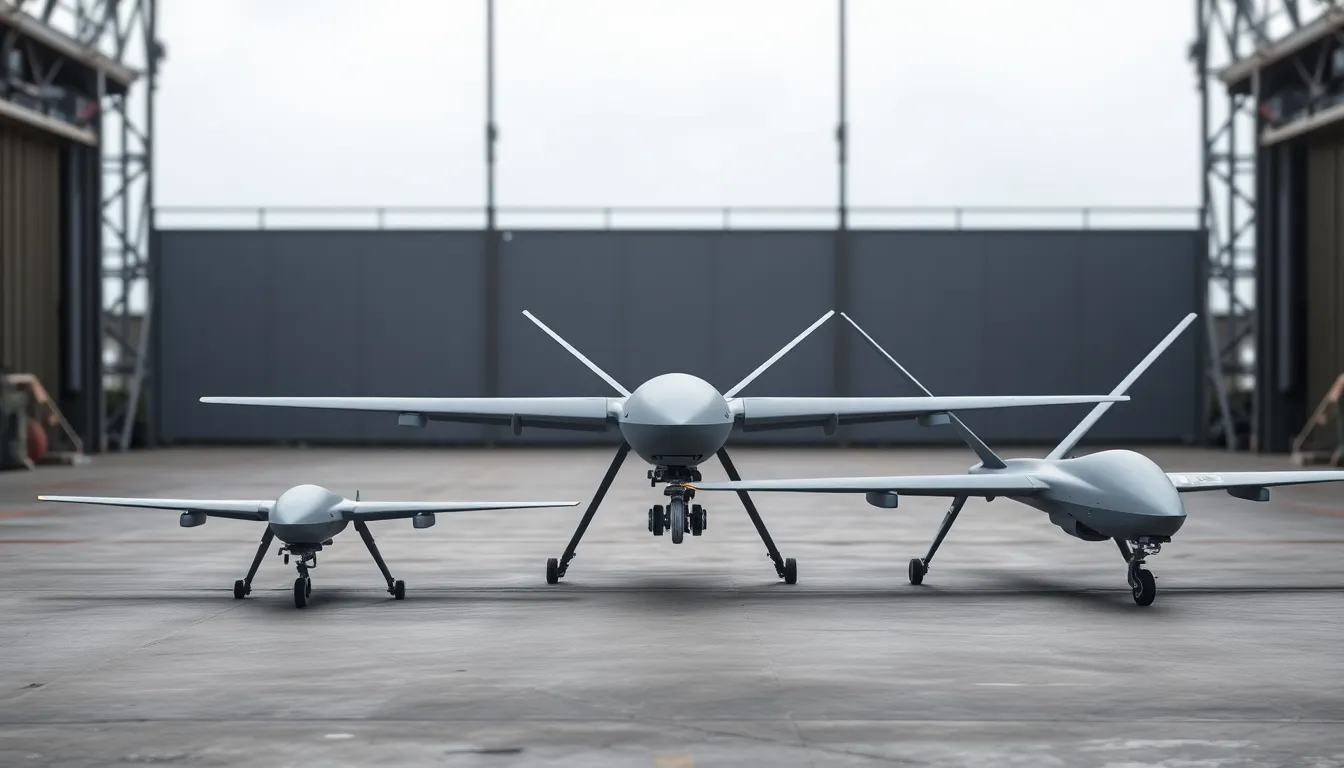
Military drones vary significantly in size, ranging from small portable units to large aircraft-like models. This diversity highlights their multifunctional roles in modern warfare.
Small Drones
Small drones, often weighing less than 20 pounds, excel in roles such as reconnaissance and intelligence-gathering. Some models can easily fit in a backpack, enhancing their portability and ease of deployment. These drones frequently utilize cameras and sensors for real-time data collection. Examples include the RQ-11 Raven and the Wasp III, which provide tactical support in various environments. Their nimble design allows for quick launches and effective use in urban settings.
Medium Drones
Medium drones like the MQ-1 Predator typically weigh around 2,250 pounds. Designed for long-endurance missions, they serve critical functions in surveillance and tactical support. Equipped with advanced sensors and weapons systems, these drones can conduct persistent monitoring of specific areas. Their operational range and versatility allow for effective engagement in conflict zones. Medium drones are valued for providing intelligence that aids decision-making in real-time scenarios, enhancing tactical effectiveness.
Large Drones
Large drones such as the MQ-9 Reaper can span over 66 feet in wingspan and weigh around 4,900 pounds. These formidable aircraft are engineered for both surveillance and strike missions, capable of remaining airborne for over 27 hours. Their design often includes advanced stealth technology, which enhances their operational capabilities. Large drones can carry significant payloads, including missiles and precision-guided munitions. They play a pivotal role in modern combat scenarios, allowing for strategic advantages while minimizing direct human exposure to danger.
Factors Influencing Drone Size
Several factors influence the size of military drones. Payload requirements and mission objectives significantly impact design specifications and operational capabilities.
Payload Capabilities
Payload capacity determines the types of equipment a drone can carry. Smaller drones often support lightweight camera systems and sensors, while larger models accommodate advanced technology, including missiles and surveillance gear. For instance, the MQ-9 Reaper can lift substantial payloads exceeding 3,000 pounds. Enhanced payload capabilities allow for increased versatility during missions, enabling reconnaissance, target acquisition, and strike options in various scenarios.
Mission Requirements
Mission specifics heavily dictate drone size. Tactical operations may require compact drones for agile maneuvers in confined urban areas. Conversely, long-range surveillance missions benefit from larger drones like the MQ-1 Predator, known for their endurance and extensive operational range. Each mission’s strategic goals influence drone design, reflecting the evolving nature of warfare and the distinct roles drones serve in military operations.
Notable Examples of Military Drones
Military drones vary significantly in size and capabilities. Two notable examples include the Predator and the Global Hawk.
Predator Drone
The MQ-1 Predator stands out in the medium-sized category. Its weight reaches approximately 2,250 pounds, and it boasts a wingspan of 48.7 feet. Designed primarily for reconnaissance and tactical support, this drone enhances military operations through its advanced sensor systems. Equipped with both cameras and weaponry, it provides real-time intelligence during missions. Predators conduct long-endurance flights, often exceeding 24 hours, enabling continuous surveillance in conflict zones. This versatility makes it a crucial asset for modern military strategies. Its role in precision strikes adds to its strategic importance in combat operations.
Global Hawk
The RQ-4 Global Hawk represents the large drone segment of military technology. With a wingspan surpassing 130 feet, it weighs roughly 14,000 pounds. Capable of flying at altitudes of 60,000 feet, it excels in long-range surveillance missions. Global Hawk gathers extensive intelligence through its sophisticated sensors, providing critical insights for military commanders. Its endurance is remarkable, with flights lasting over 30 hours, allowing for detailed mapping and monitoring across vast areas. This capability significantly improves situational awareness, enhancing decision-making in military engagements. The Global Hawk’s ability to operate remotely offers strategic advantages, minimizing risk to personnel.
Military drones come in various sizes and capabilities that cater to specific operational needs. From small reconnaissance models to large strike platforms, each type plays a vital role in modern warfare. Their design reflects technological advancements and strategic requirements, allowing military forces to adapt to evolving combat scenarios.
The diversity in drone size not only enhances their functionality but also offers tactical advantages in surveillance and engagement. As military operations continue to evolve, the significance of these aerial assets will only grow, shaping the future of defense strategies worldwide.