In the ever-evolving world of farming, drones are swooping in like the superheroes of precision agriculture. Forget the days of guessing how much water your crops need or where those pesky weeds are hiding. With drones buzzing overhead, farmers can gather data faster than you can say “crop rotation.”
Overview of Drones in Agriculture
Drones play a crucial role in modern agriculture by offering advanced tools for precision farming. Farmers utilize these unmanned aerial vehicles to efficiently collect data across large fields. Enhanced imaging technology allows documentation of crop health and growth patterns.
Drones provide real-time aerial imagery, which supports timely interventions to optimize crop yields. With multispectral sensors, they capture critical data regarding soil moisture and nutrient levels. This capability leads to clearer understanding and management of irrigation systems.
Farmers utilize drones to identify weed locations, reducing the reliance on chemical treatments. High-resolution imagery helps in detecting pest infestations early, enabling targeted responses. This precision reduces costs and environmental impact while improving crop quality.
Agronomists implement drone technology to generate detailed maps for field analysis. These maps facilitate better planning and resource allocation. Farmers often analyze this data to enhance decision-making processes, streamlining their overall operations.
Integration of drones in agriculture signifies a shift towards data-driven farming methods. Increased adoption of these technologies is evident in various regions, showcasing significant growth in agricultural efficiency. The capability to access hard-to-reach areas leads to a comprehensive overview of farm conditions, driving innovation in farming practices.
Technology Behind Drones with Precision Agriculture Capabilities
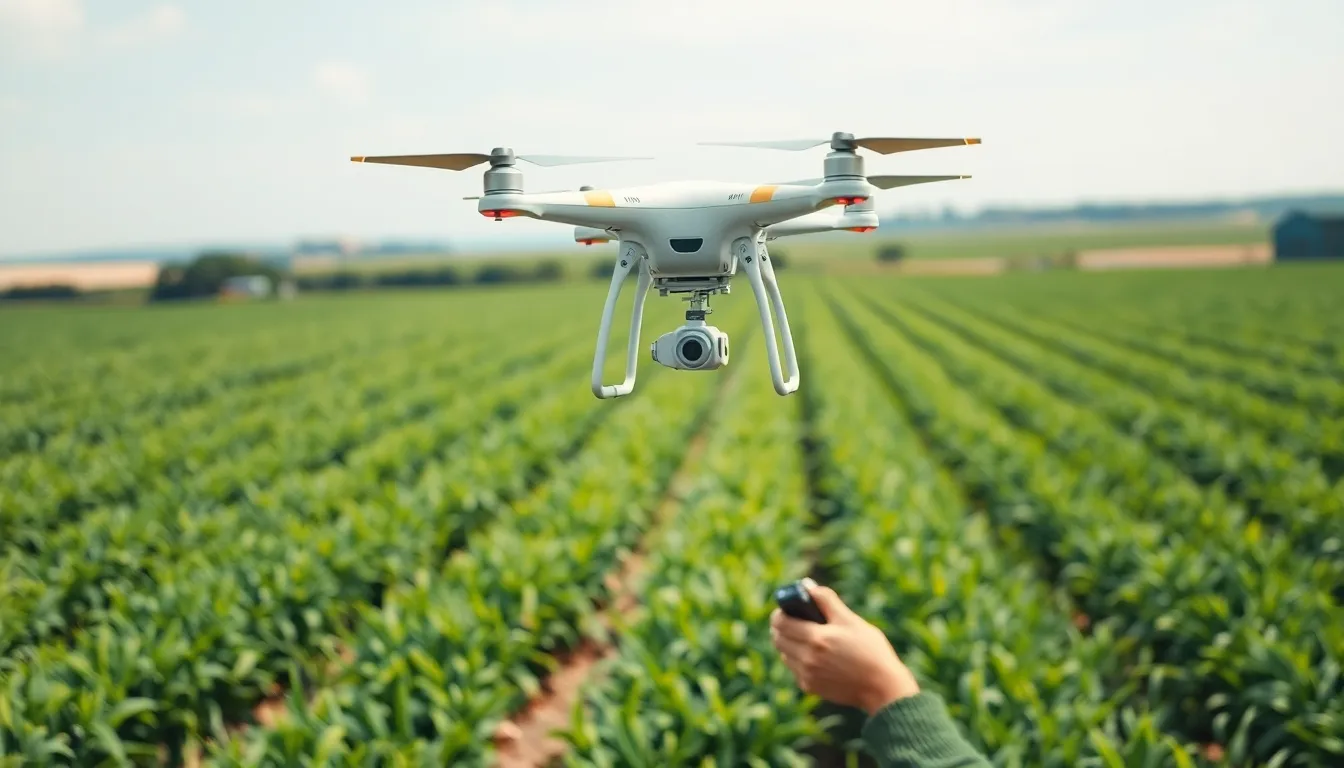
Drones significantly enhance precision agriculture through various advanced technologies and methodologies. Their usage ensures precise data collection and management in farming.
Types of Drones Used
Fixed-wing drones cover large areas efficiently, flying long distances with extended battery life. Multi-rotor drones provide flexibility in maneuverability, allowing for detailed inspections and targeted applications. Hybrid models combine both fixed-wing and multi-rotor capabilities, offering the benefits of both types. Agricultural drones range in size and cost, making it easier for farmers to select units that fit their operational needs. These drones facilitate diverse functions such as mapping, monitoring, and crop health analysis.
Key Technologies and Sensors
NDVI sensors measure vegetation health by analyzing light reflectance at different wavelengths. Thermal imaging cameras assess crop stress by detecting temperature variations, which indicate water or nutrient deficiencies. RGB cameras capture high-resolution images for general monitoring and analysis, providing detailed insights into crop conditions. GPS technology enables accurate geolocation of data points, essential for creating precise maps. LiDAR sensors generate 3D representations of fields, aiding in topographic analysis and vegetation structure assessment. These sensors empower farmers to make informed decisions, enhancing overall agricultural efficiency.
Benefits of Using Drones in Agriculture
Drones significantly enhance agricultural practices, offering multiple advantages that contribute to increased efficiency and productivity.
Enhanced Crop Monitoring
Drones capture real-time aerial imagery, providing farmers with valuable insights into crop health. Using multispectral sensors, they analyze vegetation and detect areas needing attention. These insights empower farmers to address issues proactively, whether dealing with pests, diseases, or nutrient deficiencies. Additionally, high-resolution images allow for detailed monitoring of growth patterns across large fields. Farmers gain the ability to make informed decisions based on precise data, improving overall field management. Improved crop monitoring ultimately leads to higher yields and better quality produce.
Improved Resource Management
Resource management benefits significantly from drone technology. Drones pinpoint variations in soil moisture and nutrient levels, enabling targeted irrigation strategies that optimize water usage. Precision planning decreases waste and promotes healthier crop growth. Fertilizer applications can also be managed more effectively by using data from drones. Specific areas can receive treatment while others remain untouched, leading to cost savings and environmental benefits. Enhanced resource management ensures farmers utilize inputs efficiently, contributing to sustainable agricultural practices.
Challenges and Limitations
Drones in precision agriculture face various challenges that can impact their effectiveness. Understanding these limitations is essential for optimizing their use.
Regulatory Constraints
Regulatory frameworks often restrict drone usage in agricultural settings. Compliance with FAA regulations is mandatory, especially regarding airspace navigation. Many farmers must also secure permits to operate drones commercially, leading to delays in implementation. Navigating privacy laws adds complexity, as drones operate over private properties, raising concerns among landowners. Additionally, varying state regulations can create confusion, making it difficult for farmers to apply drone technology consistently.
Operational Costs
Operational costs associated with drones can be significant. Initial investments in drone equipment range from a few thousand to tens of thousands of dollars. Maintenance expenses for software and hardware also accumulate, affecting budgets over time. Training personnel to operate drones proficiently incurs further costs, impacting overall agricultural spending. Although potential savings from improved efficiency exist, upfront costs may deter some farmers from embracing this technology fully.
Future Trends in Drone Technology for Agriculture
Emerging technologies in drone agriculture promise to further enhance precision farming practices. Increased automation capabilities are on the horizon, allowing drones to perform tasks such as planting seeds or applying fertilizers autonomously. This shift toward automation reduces labor costs and minimizes human error in agricultural operations.
Integration of artificial intelligence plays a significant role in this evolution. AI algorithms analyze data collected by drones, offering predictive insights and recommendations based on environmental variables. These insights enable farmers to make precise adjustments to their farming techniques, optimizing yields while conserving resources.
Advancements in drone battery life contribute to increased operational efficiency. Longer-lasting batteries allow drones to cover larger areas in a single flight, improving data collection speed. As a result, farmers gain timely insights, facilitating quicker decision-making and interventions.
The development of advanced sensors continues to shape the future of agricultural drones. Next-generation multispectral and hyperspectral sensors enhance soil analysis and crop health monitoring. These sensors yield more accurate readings, allowing farmers to fine-tune irrigation and fertilization plans effectively.
Collaboration among tech companies and agricultural experts is also crucial. This partnership fosters innovation, resulting in tailored drone solutions that meet specific agricultural needs. Such collaboration ensures that technological advancements align with real-world challenges faced by farmers today.
Policies surrounding drone regulations may evolve to promote their usage in agriculture. More streamlined regulations can create a supportive environment for drone integration into farming practices. A clear regulatory framework encourages farmers to adopt drone technology confidently, maximizing its benefits.
Drones are reshaping the landscape of precision agriculture by providing farmers with essential tools for data collection and analysis. Their ability to deliver real-time insights into crop health and resource management is revolutionizing farming practices. As technology continues to evolve, the integration of AI and advanced sensors will further enhance the capabilities of drones, making them indispensable in modern agriculture.
While challenges remain in terms of regulations and costs, the potential benefits far outweigh these obstacles. By embracing drone technology, farmers can optimize their operations, improve crop yields, and contribute to sustainable practices. The future of agriculture is bright with drones leading the way in innovation and efficiency.