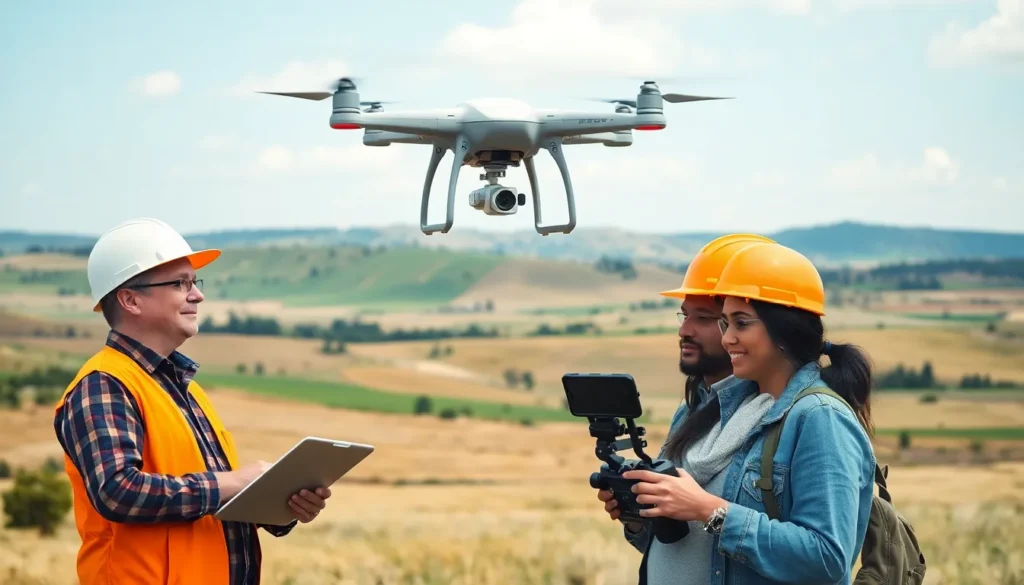

In a world where surveying used to mean trudging through muddy fields with a bulky total station, drone surveying swoops in like a superhero with a high-tech cape. These flying marvels not only save time but also provide jaw-dropping aerial views that make even the most mundane plots of land look like they belong in a real estate brochure.
Overview of Drone Surveying
Drone surveying represents a significant advancement in the field of land measurement and analysis. Utilizing unmanned aerial vehicles, this method captures high-resolution images and data that traditional techniques cannot match. Professionals in various industries, including construction and agriculture, depend on drone surveys for quick and accurate results.
Efficiency stands out as a key benefit. Drones can cover large areas in a fraction of the time required by conventional methods, leading to faster project completion. With real-time data collection, decision-makers gain timely insights into land conditions and project progress.
3D mapping is another valuable capability of drone surveying. Equipped with advanced cameras and sensors, drones generate detailed topographical maps that aid in planning and development. The precision of these maps reduces risks during construction and enhances resource management.
Cost-effectiveness also plays a crucial role. Adopting drone technology often lowers labor costs and minimizes the need for extensive equipment. For many businesses, this aspect improves budget allocation and maximizes overall efficiency.
Regulatory frameworks, however, shape the landscape of drone operations. Operators must comply with Federal Aviation Administration guidelines to ensure safe and legal flights. Understanding these regulations is essential for successful drone surveying.
Applications of drone surveying span various sectors. From monitoring crop health in agriculture to inspecting infrastructure and mapping terrain, its versatility reinforces its growing popularity. As technology advances, the capabilities of drone surveying will likely continue to expand, offering even greater benefits to stakeholders across multiple fields.
Benefits of Drone Surveying
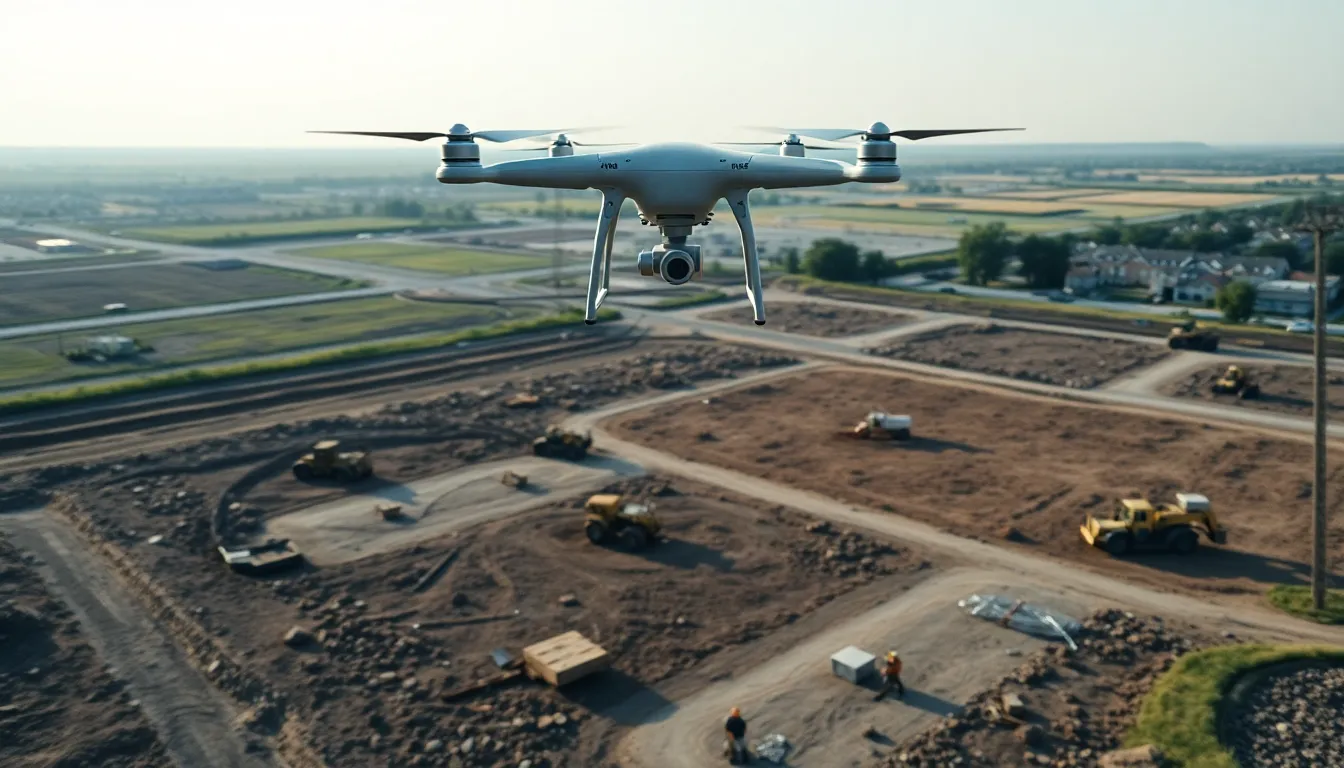
Drone surveying offers remarkable advantages that enhance efficiency and precision in various sectors. Its impact on cost and time management stands out prominently.
Cost Efficiency
Cost efficiency plays a crucial role in the appeal of drone surveying. Utilizing drones significantly reduces labor costs, allowing operators to achieve tasks that would otherwise require numerous personnel. Typical savings arise from minimal equipment and operational expenses. For instance, deploying drones eliminates the need for scaffolding or cranes for aerial data collection. Businesses often allocate saved funds to other project areas, enhancing overall budget distribution. Moreover, the reduced downtime associated with drone use leads to lower project costs, making it an attractive solution for stakeholders.
Time Savings
Time savings is another significant benefit of drone surveying. Drones cover expansive areas within shorter time frames compared to traditional survey methods. Typical aerial surveys take mere hours, while ground surveys can span days or weeks. Quick data collection allows for real-time analysis, enabling immediate decision-making. Utilizing drones surfaces high-resolution images and data instantly, enhancing responsiveness during critical phases of projects. Additionally, the ability to conduct surveys regardless of challenging terrain or weather conditions further expedites operations, ensuring deadlines are met efficiently.
Applications of Drone Surveying
Drone surveying plays a vital role in various industries, providing innovative solutions for data collection and analysis. It enhances efficiency and accuracy, making it indispensable for modern applications.
Construction and Engineering
Drones streamline construction and engineering processes, enabling rapid site assessments and monitoring. 3D modeling capabilities improve project planning while reducing delays by offering real-time data. During inspections, aerial imagery captures hard-to-reach areas, ensuring compliance with safety regulations. Project managers benefit from high-resolution photos and videos, facilitating effective communication with stakeholders. Overall, drone surveying improves project timelines and cost management in construction and engineering.
Agriculture
Agriculture sees substantial advancements through drone technology, focusing on crop monitoring and management. Drones capture valuable data about crop health, soil conditions, and irrigation needs, allowing farmers to make informed decisions. Precision agriculture techniques increase yields while minimizing resource waste. Crop mapping provides invaluable insights into pest infestations and nutrient deficiencies, enhancing productivity. In essence, drones empower farmers to optimize their operations and promote sustainable practices.
Environmental Monitoring
Environmental monitoring relies on drones to collect crucial data about ecosystems and natural resources. These aerial vehicles assess land use, wildlife populations, and habitat changes without significant disruption. Drones gather information on air quality and water bodies, offering valuable insights for conservation efforts. Scientists use this data to track environmental changes over time, leading to better policy decisions. In summary, drone surveying enhances understanding of ecological systems, supporting sustainability initiatives.
Technology Behind Drone Surveying
Drone surveying employs advanced technology to enhance land measurement and data collection. Numerous components contribute to its effectiveness, including various types of drones and sophisticated software solutions.
Types of Drones Used
Multiple drone types serve different surveying needs. Fixed-wing drones excel in covering large distances efficiently, making them ideal for expansive land assessments. Multi-rotor drones offer versatility by hovering and capturing detailed images from various angles, beneficial for intricate projects. Some drones feature advanced capabilities like thermal imaging, essential for agricultural monitoring. Others integrate LiDAR technology, providing precise topographical data. Each type brings unique advantages that cater to specific applications in surveying.
Software Solutions
Numerous software solutions support drone surveying. Flight planning software allows operators to create efficient flight paths, optimizing data collection. Real-time data processing software enables the immediate analysis of captured imagery, facilitating quick decision-making. 3D modeling software generates detailed visualizations, improving project planning and execution. Additional software options specialize in analyzing LiDAR data, enhancing topographical mapping accuracy. Together, these tools increase efficiency and accuracy, empowering industries that rely on precise surveying.
Challenges Faced in Drone Surveying
Drone surveying presents challenges that operators must consider for successful implementation. Regulatory issues and technical limitations often pose hurdles in this evolving field.
Regulatory Issues
Operators face strict regulatory frameworks set by the Federal Aviation Administration (FAA). Compliance with these regulations is crucial for safe operations. Registration of drones and obtaining necessary waivers can slow down project timelines. Furthermore, restrictions on flying in certain airspaces and during specific weather conditions add complexity. Navigating these regulations requires ongoing education and adaptability to maintain legal and safe surveying practices.
Technical Limitations
Technical limitations also affect drone surveying efficiency. Battery life of drones typically ranges from 20 to 30 minutes, which constraints flight time. High-quality imaging equipment may increase weight, further reducing endurance. Additionally, data processing often requires sophisticated software, which can demand significant time and resources. In challenging environments with dense vegetation or urban obstacles, signal loss is common and can hinder data collection. These technical challenges necessitate careful planning and investment in reliable technology and training.
Drone surveying is revolutionizing the way industries approach land measurement and analysis. By offering unmatched efficiency and cost savings it enables faster decision-making and enhances project planning. The ability to capture high-resolution images and create detailed 3D maps is transforming sectors from agriculture to construction.
As technology continues to evolve drone surveying will undoubtedly expand its applications and capabilities. While challenges such as regulatory compliance and technical limitations exist they can be navigated with proper planning and investment. Embracing drone technology is not just a trend; it’s a strategic move that can significantly elevate operational effectiveness across various fields.