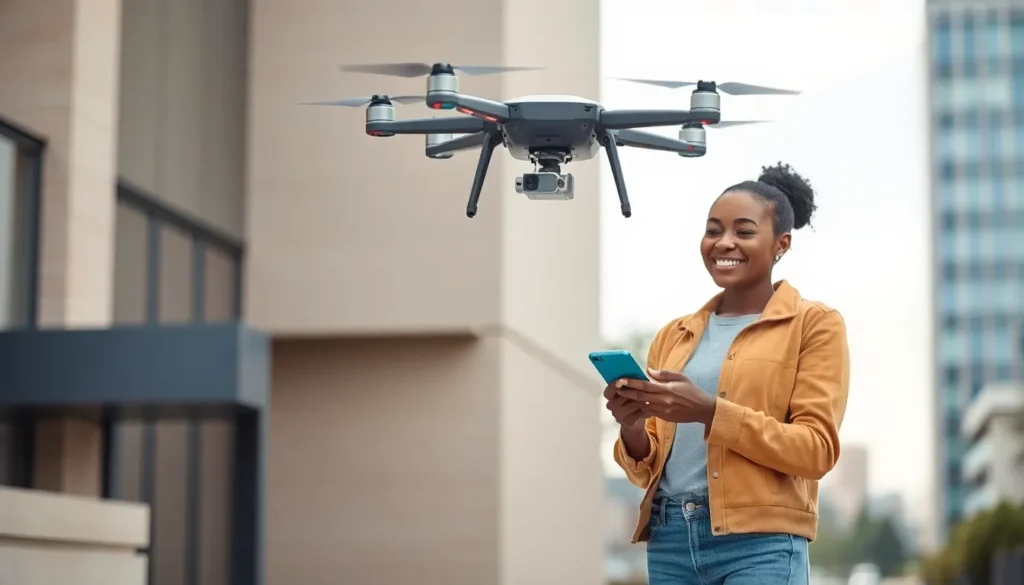

Imagine a world where your favorite snacks arrive at your doorstep faster than you can say “pizza.” Drone delivery is making that dream a reality, and it’s not just for the tech-savvy. With the ability to zip through traffic and avoid pesky parking spots, these flying wonders are transforming the way we think about getting goods delivered.
Overview Of Drone Delivery
Drone delivery represents a significant shift in logistics and transportation. It utilizes unmanned aerial vehicles to transport goods directly to consumers. Convenience stands as a key benefit, as drones reduce delivery times by bypassing traffic congestions and parking limitations.
Efficiency is another advantage, with drones capable of delivering packages in urban and rural settings alike. According to recent studies, drone deliveries can decrease transportation costs by up to 30%. This cost reduction emerges from lower fuel consumption and minimized labor expenses associated with traditional delivery methods.
Increased demand for quick and reliable delivery services pushes businesses to adopt drone technology. Retailers are exploring partnerships with drone companies to enhance their offerings. For instance, companies like Amazon and Wing are implementing pilot programs to test delivery models in various markets.
Safety measures are also crucial in developing drone delivery systems. Advanced navigation technology ensures that drones avoid obstacles and maintain safe altitudes. Regulations from aviation authorities, such as the Federal Aviation Administration (FAA), govern airspace and promote safe operations for commercial drone deliveries.
Consumer acceptance plays a vital role in the success of drone delivery. Education about safety, privacy, and reliability can help ease concerns among potential users. Surveys indicate a growing acceptance of drone deliveries, with over 60% of consumers expressing interest in using drones for everyday purchases.
Ultimately, drone delivery holds the promise of transforming the way people receive goods, making it faster, more efficient, and more accessible than ever before. With ongoing technological advancements and regulatory support, this trend is poised for significant growth in the upcoming years.
Benefits Of Drone Delivery
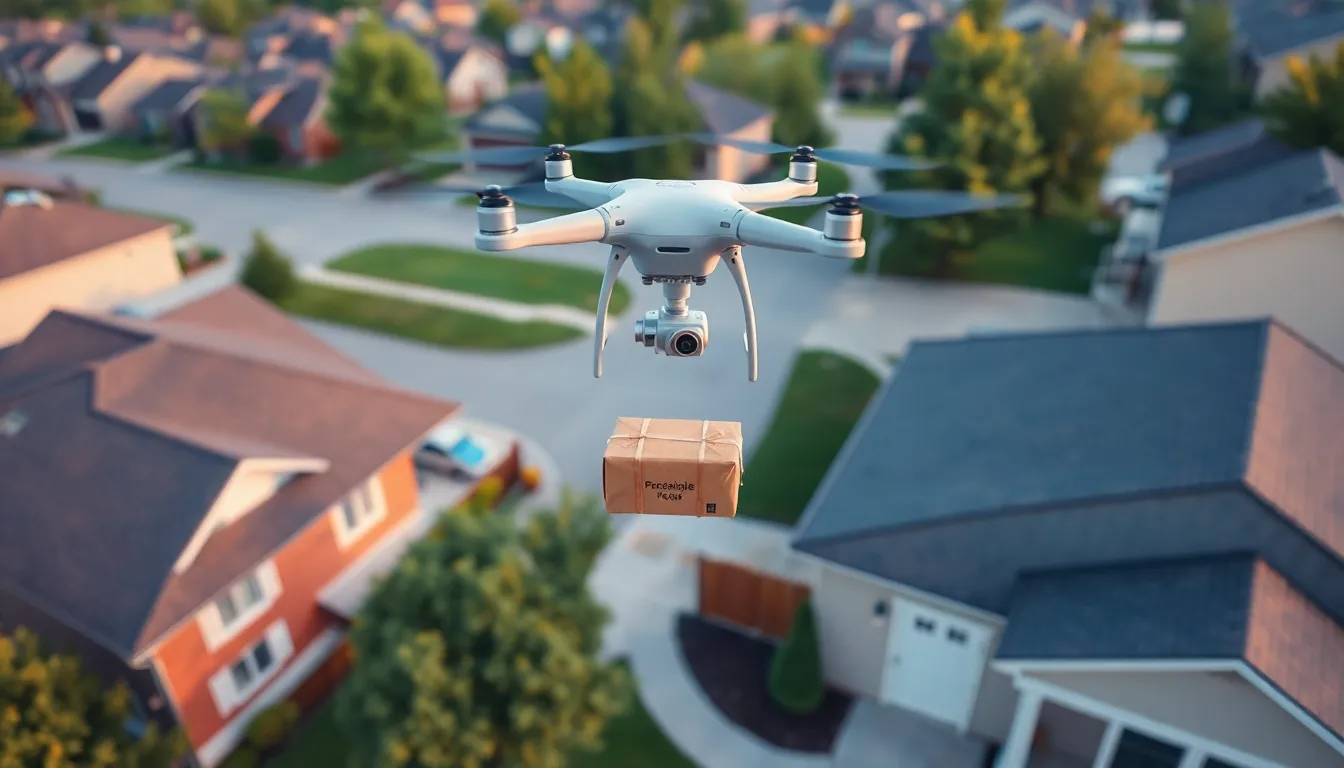
Drone delivery offers numerous advantages, transforming logistics and enhancing consumer experiences. This approach to transportation is gaining traction among retailers and consumers alike.
Speed And Efficiency
Speed stands out as one of the primary benefits of drone delivery. Drones bypass traffic congestion, allowing for swift transportation directly to customers’ locations. Deliveries that typically take hours can occur in minutes, significantly improving service times. Efficiency is also evident in their ability to deliver to remote or hard-to-reach areas. This capability reduces the time spent organizing complicated routes, streamlining the entire delivery process.
Cost-Effectiveness
Cost-effectiveness emerges as a compelling reason for adopting drone delivery. Studies show that drone services can cut transportation costs by up to 30%. Fuel consumption decreases due to drones’ direct flight paths, eliminating expenses associated with vehicle maintenance and labor. Additionally, companies can reallocate those savings toward enhancing other areas of their business. Drones represent a smart investment that not only lowers operational costs but also allows businesses to offer competitive pricing to consumers.
Challenges In Implementing Drone Delivery
Implementing drone delivery faces various challenges that must be addressed for widespread adoption. Key concerns include regulatory hurdles and technological limitations.
Regulatory Hurdles
Regulation remains a significant barrier to drone delivery. Government agencies like the FAA impose strict guidelines to ensure safety and privacy. These guidelines may slow down the approval process for commercial drone operations. Companies often encounter difficulties navigating these regulations, which vary by region. Compliance with local air traffic requirements is essential, complicating operational logistics. Furthermore, evolving policies may create uncertainty for businesses investing in drone technology. Adapting to new regulations requires ongoing collaboration between stakeholders, proving vital for successful deployment.
Technological Limitations
Technological challenges also hinder the advancement of drone delivery. Current drone models face restrictions on flight distance and payload capacity. They often lack the sophisticated navigation systems needed for safe operation in urban environments. Obstacles like buildings and power lines can pose serious risks, necessitating robust obstacle detection technologies. Battery life remains another concern; most drones can fly for only 30 minutes to 2 hours, limiting their range. Moreover, developing reliable communication systems is crucial for maintaining control and monitoring flights. Overcoming these technological barriers is essential to realize the full potential of drone delivery.
Case Studies Of Drone Delivery
Drone delivery is gaining traction, showcasing its viability across various sectors. Numerous companies are pioneering innovations in this field, proving how effective and efficient this technology can be.
Companies Leading The Charge
Amazon leads the drone delivery space with its Prime Air initiative, aiming to deliver packages within 30 minutes. Wing, a subsidiary of Alphabet, focuses on delivering food and essential items, partnering with local businesses to enhance accessibility. DHL has invested in drone technology for logistics, utilizing automated systems to provide timely deliveries. Zipline revolutionizes medical delivery, transporting blood and vaccines to remote areas, showcasing drones’ potential for critical supply needs. Each company continues to experiment and expand its drone programs, demonstrating commitment to the future of delivery services.
Successful Implementations
Walmart tested drone delivery in 2021, successfully delivering groceries to select customers within 30 minutes. UPS collaborated with CVS to supply prescription medications through drones, improving delivery speed for health services. In Australia, Wing conducted over 100,000 drone deliveries, showcasing its operational efficiency and consumer acceptance. The University of Hawaii utilized drones for delivering medical supplies to remote islands, reducing logistical challenges. Each of these successful implementations highlights the potential of drones to transform delivery processes, proving their advantages in speed and accessibility.
Future Of Drone Delivery
Emerging advancements signal a promising future for drone delivery. Significant growth is expected, driven by increased consumer demand for rapid delivery solutions. Next-day deliveries may soon evolve into same-hour services, becoming standard in urban areas.
Regulatory frameworks will likely adapt as technology improves, allowing for more streamlined operations. Companies like Amazon and Wing are already experimenting with new models, indicating strong industry commitment. Public perception also plays a key role; continued education about safety and benefits can further increase consumer acceptance.
Efficiency metrics highlight potential cost savings. Transportation costs might decrease by up to 30%, providing companies with additional resources to invest elsewhere. Drones equipped with advanced navigation systems can enhance delivery speed while reducing congested route reliance.
Sustainability may influence future developments as well. Many companies are exploring electric drones, which could decrease carbon footprints associated with traditional delivery methods. As operational practices shift, not only will environmental impact improve, but consumer preferences may also lead to a stronger focus on eco-friendly logistics.
The versatility of drones cannot be understated. Their ability to reach remote areas positions them uniquely in sectors such as healthcare and grocery. Deploying drones for immediate deliveries, particularly in emergencies, presents a significant advancement in logistics capabilities.
Partnerships across industries are essential. Collaborations between retailers and technology providers can unlock new possibilities in drone delivery services. Innovative solutions may emerge as companies forge ahead, integrating drone technology into existing supply chains and inventory management systems.
Drone delivery is poised to reshape the logistics landscape in remarkable ways. With their ability to navigate obstacles and deliver goods quickly, drones offer a glimpse into a future where convenience is paramount. As technology advances and regulations evolve, the integration of drones into everyday life seems inevitable.
The growing acceptance among consumers indicates a readiness for this transformation. Companies are already reaping the benefits of faster delivery times and reduced costs. The potential for drones to reach remote areas adds another layer of accessibility that traditional delivery methods can’t match.
As the industry continues to innovate and adapt, drone delivery could become a standard service, enhancing the way people receive their products while contributing to sustainability efforts. The future looks bright for this dynamic delivery solution.