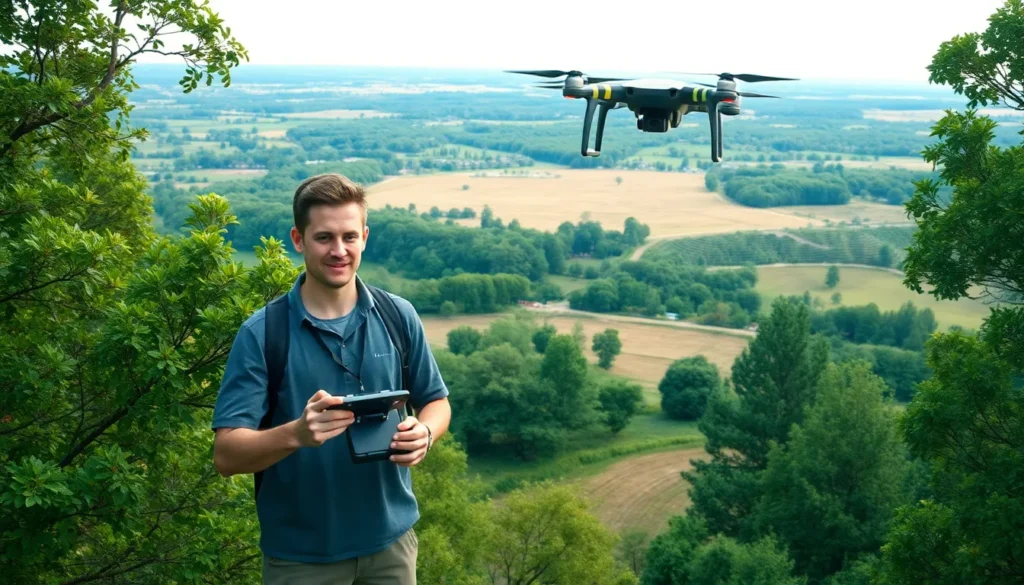

In a world where everyone’s a budding filmmaker, drone camera angles can make or break your aerial masterpiece. Whether it’s a sweeping landscape shot or an epic close-up of your dog’s bewildered face as it chases a squirrel, the right angle can transform the ordinary into the extraordinary. Who knew flying a camera could unleash such cinematic magic?
Overview of Drone Camera Angles
Drone camera angles significantly contribute to visual storytelling in filmmaking. Unique perspectives elevate scenes, adding depth and context. This section explores various angles and their creative applications.
Establishing shots capture landscapes from above, providing an expansive view of the setting. A bird’s-eye view often highlights relationships between elements, enhancing storytelling.
Low-angle shots create a sense of power and grandeur. By positioning the drone close to the ground, filmmakers can make subjects appear imposing. This technique can change viewer perception dramatically.
High-angle shots offer a different perspective, showcasing subjects from above. When employing this angle, filmmakers portray subjects as smaller or more vulnerable, which can evoke emotional responses.
Overhead shots, commonly referred to as top-down views, provide a comprehensive look at scenes. This angle allows for intricate patterns and movements within the frame to emerge, creating visual interest.
Tracking shots enable dynamic movement alongside or behind subjects. Utilizing this technique captures action effectively, making scenes more engaging.
Circular shots involve rotating the drone around a subject. Filmmakers use this angle to emphasize details and create a sense of harmony in the footage.
Dramatic shifts in angles transform ordinary situations into extraordinary visual experiences. Experimenting with these various angles unlocks creative possibilities in drone cinematography, enriching overall production quality.
Importance of Camera Angles in Drone Photography
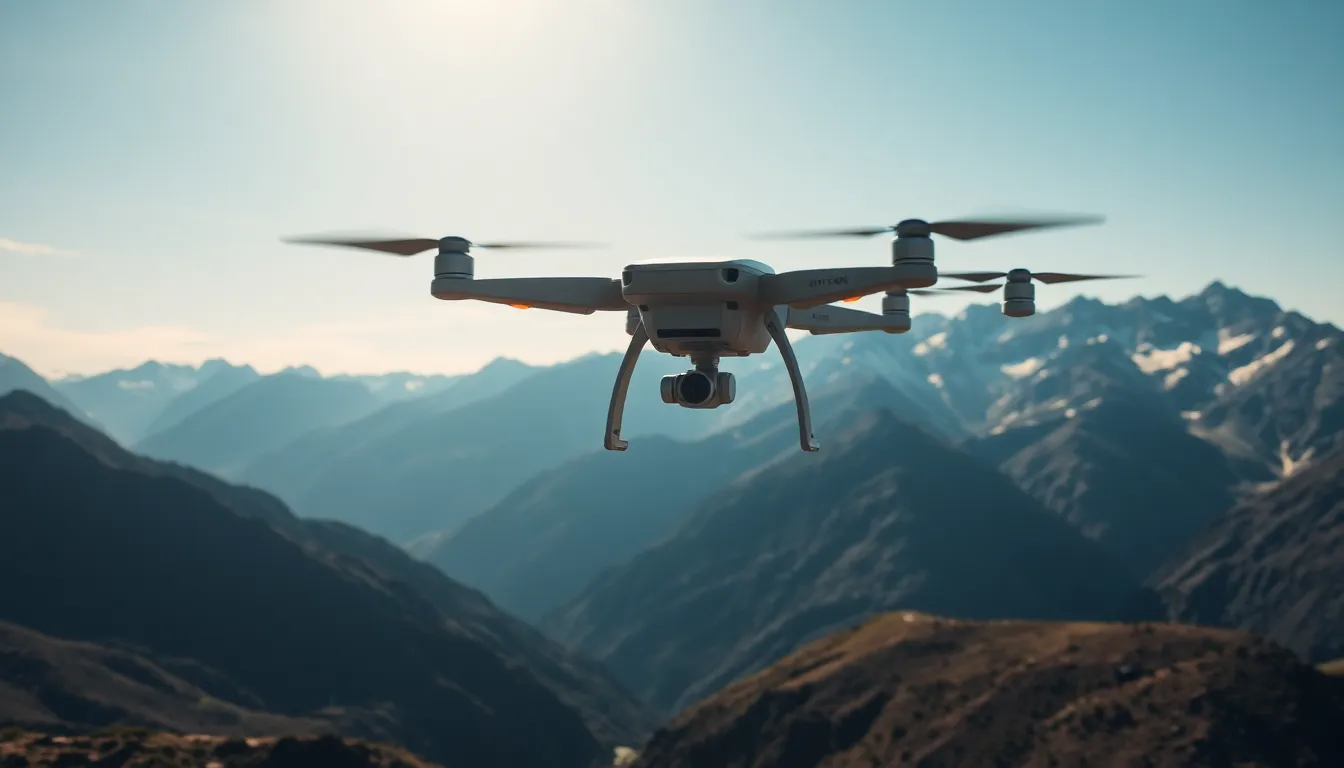
Camera angles significantly influence the outcome of drone photography, shaping visual narratives. By choosing the right angle, filmmakers can enhance viewer engagement and evoke emotions.
Enhancing Visual Storytelling
Creative angles enhance visual storytelling by providing context and depth. Establishing shots showcase vast landscapes, setting the stage for the narrative. Low-angle shots emphasize subjects’ power and grandeur, making viewers feel small in comparison. Conversely, high-angle shots portray vulnerability, allowing the audience to connect emotionally with the subject. Dynamic movement is achieved through tracking shots, creating excitement and urgency in scenes. Various angles contribute richly to the storytelling process, transforming ordinary moments into powerful visual experiences.
Capturing Unique Perspectives
Unique perspectives captured by drone angles reveal details often missed from traditional views. Overhead shots present intricate patterns and symmetrical compositions, showcasing landscapes in a compelling way. Circular shots draw the viewer’s eye, emphasizing specific features within a scene that enhance visual interest. By experimenting with unconventional angles, filmmakers can uncover fresh narratives and inspire awe. These distinct viewpoints help tell stories that resonate with audiences, creating lasting impressions and elevating the cinematic experience.
Types of Drone Camera Angles
Various drone camera angles play a crucial role in shaping visual narratives and enhancing storytelling. Each angle offers unique perspectives that captivate audiences.
Bird’s Eye View
Bird’s Eye View offers a top-down perspective, showcasing expansive landscapes and intricate settings. It reveals the layout of scenes, allowing viewers to grasp spatial relationships. Filmmakers often use this angle to impart a sense of scale, making subjects appear small against vast backgrounds. This technique effectively captures crowds, natural formations, or architectural designs. Overall, it emphasizes context, enriching the viewer’s understanding of the scene.
Low-Angle Shots
Low-Angle Shots create a dramatic effect, making subjects appear larger and more imposing. By positioning the camera below eye level, filmmakers can instill a sense of power or grandeur. This angle often highlights heroic poses and enhances the significance of characters. By contrasting with surrounding environments, it adds depth and drama to action sequences or emotional moments. Using low-angle shots can evoke strong reactions, making viewers feel engaged in the narrative.
Dutch Angle
Dutch Angle tilts the camera, creating a sense of unease or tension. This approach captures dynamic events or chaotic elements effectively, drawing the viewer’s attention. A tilted perspective can signify imbalance, hinting at conflict or disarray within the story. It’s often utilized in thrillers or action films to amplify suspense. This unique angle engages audiences, encouraging them to immerse themselves in the unfolding drama.
Follow Shots
Follow Shots track subjects in motion, providing viewers with a sense of dynamic engagement. By maintaining proximity to moving elements, filmmakers enhance the feeling of movement and activity. This technique can work well in action sequences, showcasing fluid transitions between scenes. Viewers gain insight into the character’s journey, allowing them to connect more deeply with the narrative. Engaging follow shots amplify excitement, keeping audiences on the edge of their seats.
Tips for Mastering Drone Camera Angles
Mastering drone camera angles significantly elevates visual storytelling. Recognizing the nuances of flight and camera settings enhances the overall experience.
Understanding Flight Modes
Understanding flight modes provides advantages when capturing drone shots. The Standard Mode balances stability with maneuverability, ideal for general photography. Sport Mode increases speed and responsiveness, perfect for dynamic action sequences. The Cinematic Mode prioritizes smoothness over speed, allowing for fluid shots that enhance dramatic scenes. Each mode caters to different filming needs, so selecting the right one empowers a filmmaker’s creative vision.
Camera Settings and Adjustments
Camera settings and adjustments greatly impact the quality of drone footage. Adjusting ISO enhances sensitivity to light, which is crucial in varied lighting conditions. Setting shutter speed appropriately reduces motion blur, especially during fast movements. White balance ensures colors remain true to life, essential for maintaining visual consistency. Utilizing custom presets streamlines future shoots and guarantees that adjustments align with creative goals. Prioritizing these settings ensures each shot captures the intended atmosphere and emotion effectively.
Best Practices for Safety and Compliance
Prioritizing safety during drone operations ensures not only compliance with regulations but also protects people and property. Familiarity with local laws regarding drone usage remains essential. Understanding no-fly zones, altitude restrictions, and airspace classifications helps operators navigate the regulatory landscape effectively.
Establishing a pre-flight checklist enhances safety. This checklist should include verifying the drone’s condition, inspecting battery levels, and ensuring that the firmware is up to date. Flying in good weather conditions contributes to safer operations, as high winds or poor visibility can lead to accidents.
Maintaining a line of sight with the drone allows for better control and quick reaction to any unforeseen events. Utilizing visual observers can strengthen safety efforts, ensuring that someone else monitors the drone’s surroundings.
Conducting a thorough risk assessment before each flight is beneficial. Identifying potential hazards, such as low-hanging branches or nearby structures, reduces the likelihood of accidents. Engaging with relevant stakeholders, including local authorities, might be necessary, especially when filming in public or sensitive areas.
Documenting flights contributes to a better understanding of operational practices. Keeping logs of flight times, locations, and compliance checks aids in analyzing performance and identifying areas for improvement.
Attending training sessions and workshops helps enhance skills and knowledge about drone technology and regulations. Pursuing certification from recognized organizations can also provide an added layer of credibility.
Active participation in drone communities can offer ongoing learning and support. Sharing experiences, seeking advice, and staying updated with the latest legal changes fosters a culture of safety and compliance among operators. By adhering to these practices, drone operators cultivate a responsible and professional approach to their craft.
Mastering drone camera angles opens up a world of creative possibilities for filmmakers. Each angle offers a unique way to tell a story and engage viewers, transforming mundane moments into captivating visuals. By experimenting with various perspectives, filmmakers can enhance their narratives and evoke deeper emotional responses.
Understanding the technical aspects of drone operation along with safety practices is crucial for achieving stunning results. With the right knowledge and skills, anyone can harness the power of drone technology to elevate their filmmaking. Embracing these techniques not only enriches the cinematic experience but also leaves a lasting impression on audiences.