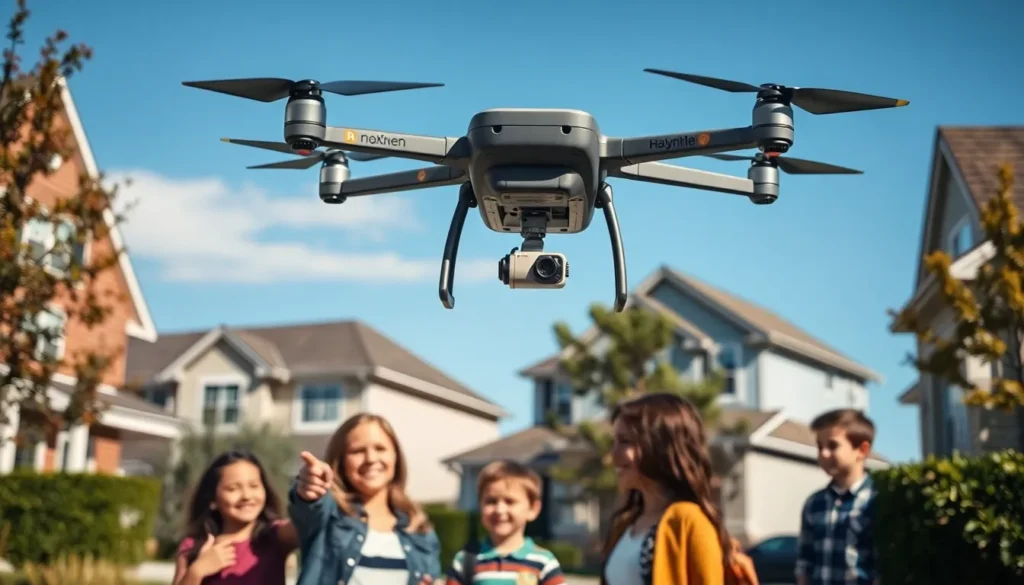

Imagine a world where your pizza arrives faster than you can say “extra cheese.” Delivery drones are not just a futuristic fantasy; they’re quickly becoming a reality. These high-flying marvels are revolutionizing the way goods reach our doorsteps, soaring above traffic jams and pesky delivery delays.
Overview of Delivery Drones
Delivery drones represent a significant advancement in logistics. These unmanned aerial vehicles execute deliveries efficiently, swiftly transporting goods directly to consumers. Companies such as Amazon and Google pioneered early adoption, showcasing the commercial viability of this technology.
Operating principles for delivery drones involve pre-programmed routes and GPS navigation systems. These systems ensure accurate location tracking and optimize flight paths, allowing drones to navigate urban environments effectively. Reduced reliance on roadways minimizes delays caused by traffic congestion.
A major advantage of delivery drones includes their ability to cut delivery times. According to research, drones can deliver packages in under 30 minutes compared to traditional methods, which often take hours. This speed enhances customer satisfaction and could revolutionize e-commerce.
Regulatory frameworks shape the growth of delivery drones. In the United States, the Federal Aviation Administration (FAA) plays a crucial role, establishing guidelines for commercial drone operations. These regulations aim to ensure safety and mitigate potential hazards in airspace.
Public perception influences the acceptance of delivery drones. Surveys show that many consumers welcome the convenience, though concerns regarding privacy and noise persist. Addressing these concerns through transparency and technological improvement is essential for broader adoption.
In addition to speed, delivery drones offer cost-effective solutions for businesses. Lower operational costs may arise from decreased fuel expenses and labor requirements. This shift toward automation aligns with market trends, reflecting businesses’ increasing interest in innovative delivery methods.
As drone technology continues to advance, potential applications expand beyond traditional goods delivery. Medical supply transport and emergency response capabilities illustrate the versatility of delivery drones. Such innovations could significantly impact industries requiring rapid logistics.
Technology Behind Delivery Drones
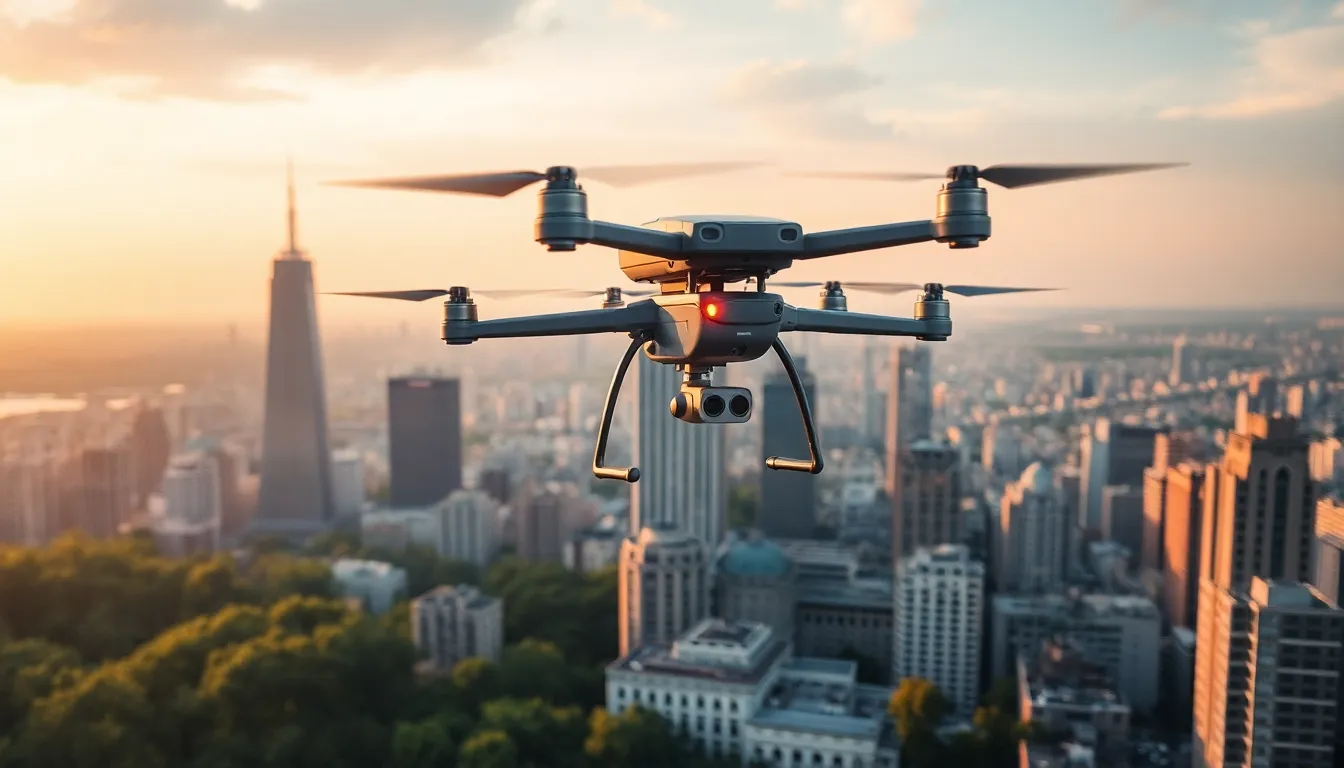
Delivery drones leverage advanced technology to provide efficient logistics solutions. They transform traditional delivery by utilizing various components and innovative systems.
Types of Delivery Drones
Different types of delivery drones exist, catering to specific needs. Fixed-wing drones operate like airplanes, covering vast distances efficiently. Multirotor drones, more common for urban deliveries, have vertical takeoff and landing capabilities, which allows them to navigate tight spaces. Hybrid drones combine features from both types, enabling versatility for different delivery scenarios. Each category plays a crucial role in addressing unique logistical challenges.
Key Components and Features
Key components and features define the functionality of delivery drones. GPS navigation systems ensure accurate flight paths, allowing precise package deliveries. Communication systems facilitate real-time data exchange between drones and control centers, enhancing operational effectiveness. Payload capacity impacts the types of goods delivered, ranging from small packages to more substantial items. Battery technology influences range and flight time, making advancements crucial for efficient operations. Safety features, such as obstacle avoidance sensors, prevent accidents and ensure safe delivery processes.
Benefits of Using Delivery Drones
Delivery drones offer a range of advantages that enhance logistics and customer satisfaction. These benefits include improved speed, efficiency, and cost savings for businesses.
Speed and Efficiency
Delivery drones can transform the logistics landscape by cutting delivery times significantly. Research shows drones often deliver packages in under 30 minutes. Rapid delivery is especially noticeable in urban settings, where traffic congestion slows traditional vehicles. Navigating pre-programmed routes, drones efficiently bypass obstacles, ensuring consistent and timely transportation of goods. Enhanced efficiency benefits customers, who receive products quickly, and companies, which streamline operations and meet increasing demand in e-commerce.
Cost Savings
Using delivery drones leads to substantial cost reductions for businesses. Fuel expenses decrease as drones rely on electric power instead of fossil fuels. Labor costs also decline; fewer personnel manage ground operations, allowing businesses to allocate resources more efficiently. A streamlined logistics process enables firms to scale operations while maintaining competitiveness. Savings translate into lower prices for consumers, making delivery services more attractive and accessible, ultimately driving higher sales and customer retention.
Challenges and Limitations
Delivery drones face several obstacles that hinder their widespread adoption and use. Addressing these challenges is crucial for companies aiming to integrate this technology into regular operations.
Regulatory Hurdles
Regulatory frameworks significantly impact the deployment of delivery drones. The Federal Aviation Administration (FAA) has established guidelines to ensure safety and maintain airspace integrity. Companies often encounter stringent regulations related to air traffic management, drone pilot certification, and no-fly zones. Compliance with these rules requires ongoing coordination with various authorities and may slow down deployment timelines. Internationally, different countries enforce distinct regulations, creating additional complexity for companies seeking to operate globally. Navigating these regulatory landscapes can present logistical and legal challenges that companies must address to utilize delivery drones effectively.
Safety and Reliability Concerns
Safety remains a primary concern regarding delivery drones’ operation. Accidents related to drone crashes can lead to injuries or property damage, raising significant liability issues for operators and manufacturers. Reliability also comes into play, as drones depend on various technologies, including GPS navigation and battery life. Equipment failures or signal losses can lead to delivery delays or crashes. Public perception of safety can influence consumer acceptance; reassurance through robust safety measures is essential. The development of advanced safety features, such as obstacle detection systems, is crucial for enhancing operational reliability and instilling consumer confidence in delivery drone services.
Future of Delivery Drones
New advancements in delivery drone technology promise to reshape logistics and transportation. Enhanced communication systems allow drones to provide real-time updates, increasing transparency for consumers. Future iterations aim for improved battery life, enabling longer flight durations and expanded range for deliveries.
Cost savings will become even more pronounced as logistics companies scale services. The reliance on electric power minimizes fuel expenses, further attracting businesses to drone solutions. Innovative features, such as advanced obstacle detection systems, are being developed to enhance safety and reliability.
Regulatory challenges remain a significant factor in the growth of delivery drones. Companies are working closely with the FAA to ensure compliance while advocating for progressive policy changes. Greater flexibility in air traffic management may lead to more widespread adoption.
Public acceptance plays a vital role in the future success of delivery drones. Many consumers appreciate the convenience, yet concerns persist about noise and surveillance. Addressing these issues through community engagement and improved technology fosters trust and acceptance.
Potential applications are expanding beyond traditional delivery. Medical supply delivery and disaster response initiatives represent exciting opportunities for drones. As industries embrace these advancements, the logistic capabilities of drones could revolutionize various sectors.
Growth in e-commerce drives rising demand for efficient delivery solutions. The rapid fulfillment of orders enhances customer satisfaction, pushing companies to invest further in drone technology. Increased competition in the marketplace may lead to innovative solutions that prioritize customer experience.
Delivery drones are on the brink of revolutionizing logistics and e-commerce. Their ability to provide faster and more efficient delivery solutions meets the growing demand for convenience. As technology advances and regulatory frameworks evolve, the potential for drones to enhance various industries becomes increasingly evident.
Public acceptance will play a crucial role in their widespread adoption. As companies address concerns around privacy and safety, consumer trust will grow. The future of delivery drones promises not only to streamline operations but also to reshape how goods are transported, making them an integral part of modern logistics.