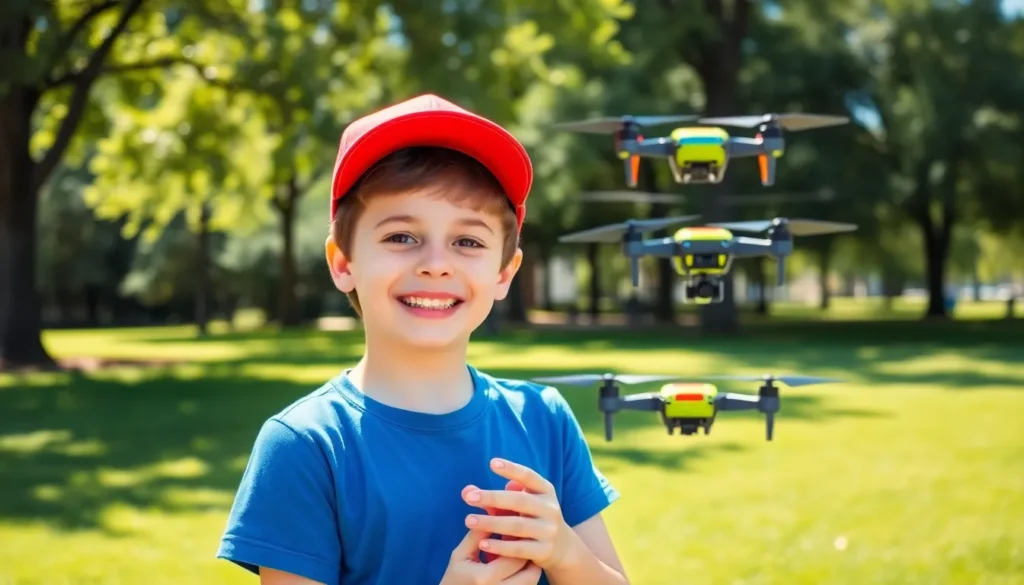

Drones for children are taking the skies by storm, and it’s not just because they look super cool. Imagine a world where kids can explore their creativity, learn about technology, and have a blast—all while flying a mini aircraft. These high-flying gadgets aren’t just toys; they’re gateways to adventure and learning.
Understanding Drones For Children
Drones designed for children offer exciting opportunities for exploration and learning. These devices come in various shapes and sizes, encouraging creativity and technological understanding.
What Are Drones?
Drones are unmanned aerial vehicles controlled remotely or autonomously. These flying devices can capture video, take photos, or simply provide flying experiences. They utilize various technologies, including cameras and sensors, making them versatile for different uses. Battery power typically fuels drones, affecting their flight time and performance. Many models are equipped with safety features, ensuring children operate them without significant risks. This enhanced safety makes drones accessible to younger users.
Types Of Drones Suitable For Kids
Several types of drones cater to children, each offering unique functions and features. Mini drones provide compact sizes, ideal for indoor flying. These lightweight options are easy to maneuver and often come with built-in safety features. Camera drones make capturing stunning images an exciting experience, encouraging kids to explore photography. Racing drones target those interested in speed, offering exhilarating outdoor experiences. Educational drones, designed for learning, often come with coding and programming capabilities. These models can enhance STEM skills while providing fun.
Benefits Of Drones For Children
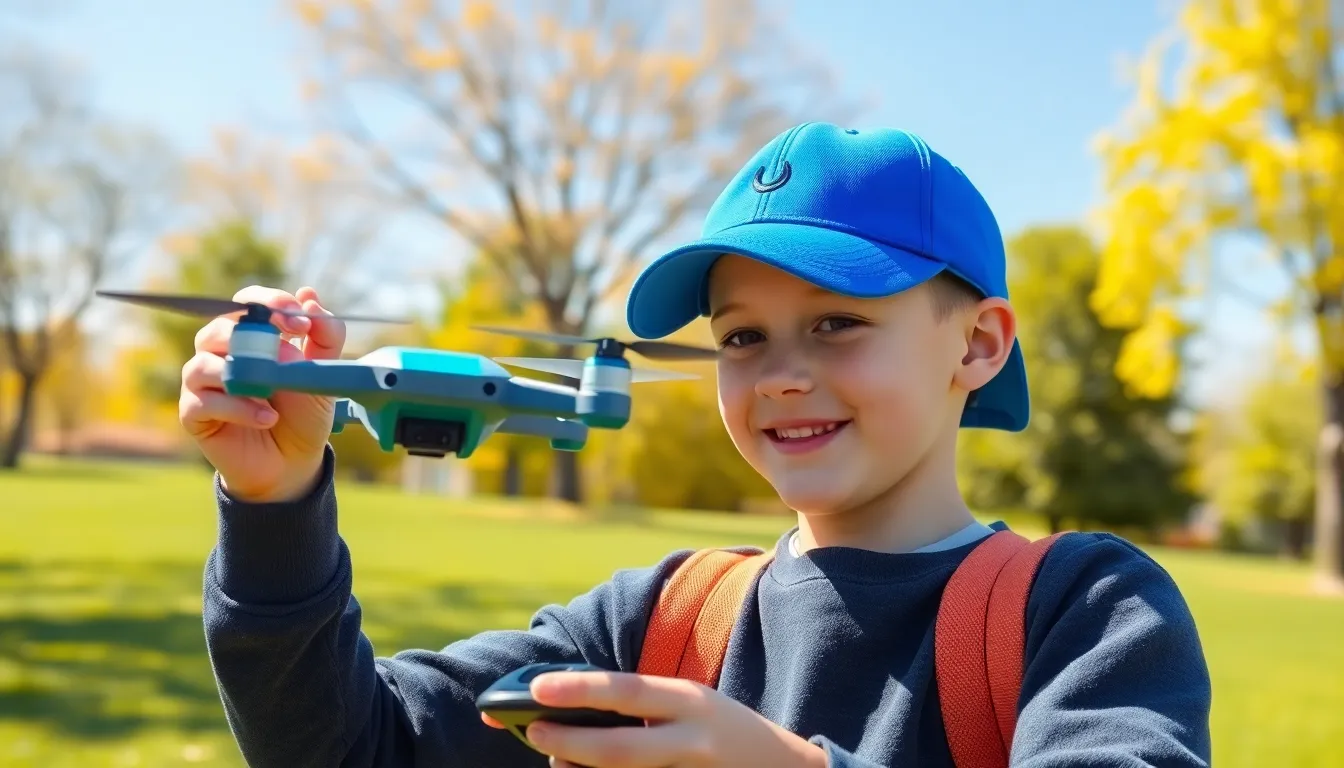
Drones provide numerous benefits for children, enhancing their learning and encouraging active lifestyles. Each advantage contributes to a child’s development in various ways.
Enhancing Learning And Creativity
Drones stimulate children’s curiosity and foster innovation. Kids learn about technology and engineering principles as they assemble or operate drones. Various models offer opportunities for coding and problem-solving. Exploring aerial photography gives children a chance to express themselves creatively. Capturing images from unique perspectives enhances visual storytelling skills. Engaging with these devices introduces concepts of physics and aerodynamics through hands-on experience.
Promoting Outdoor Activity
Drones encourage outdoor exploration and physical activity. Flying a drone requires participants to engage in various movements, such as running or tracking the device. Such involvement helps combat sedentary behavior among children. Outdoor flying promotes social interaction when kids collaborate or compete in racing scenarios. Drones facilitate a fun way to learn about nature and the environment while enjoying time outside. Different flying locations allow for diverse experiences and foster an appreciation for the outdoors.
Choosing The Right Drone For Kids
Selecting the right drone for kids involves considering several key factors that enhance enjoyment and safety. Parents often look for age-appropriate models that align with their child’s interests and skills.
Age Appropriateness
Age plays a crucial role in choosing a drone. Drones designed for younger children typically feature simple controls, lightweight designs, and durable materials. For kids aged 6 to 10, mini drones with limited range and basic features provide a great introduction. Models suitable for older kids, around 11 and up, often include advanced functions like camera capabilities and programmable options. Each age group benefits from features that cater to their developing skills and interests, ensuring a safe flying experience.
Safety Features To Consider
Safety remains a top priority when selecting drones for children. Look for models equipped with features like propeller guards that prevent injury and damage. Additionally, drones with altitude hold mechanisms help maintain stable flight, reducing crash risks. Many beginner drones also include one-key takeoff and landing, simplifying control for novice users. Battery life is essential; longer durations allow for extended playtime. Such safety measures enhance overall experience, giving parents peace of mind while children explore their passion for flying drones.
Tips For Teaching Kids To Fly Drones
Teaching kids to fly drones involves understanding the basics and following safety guidelines. Fostering a sense of responsibility and awareness about their surroundings can enhance their flying experience.
Basic Drone Flight Mechanics
Understanding basic drone flight mechanics is essential for young pilots. Drones fly using four propellers, which create lift and allow for movement in various directions. Controlling drone speed and direction relies on the remote control’s joysticks. Kids should learn about altitude control for safe and stable flying. Additionally, grasping concepts like throttle, yaw, pitch, and roll can aid in mastering flight techniques. Familiarizing children with these fundamentals helps them build confidence and improve their skills over time.
Safety Guidelines For Young Pilots
Safety guidelines ensure a secure flying environment for young drone pilots. Always supervise children during flights, especially in crowded areas or near sensitive locations. Using a designated flying area minimizes risks to people and property. Compliance with local regulations enhances safety; flying below a specified height is common. Children should also maintain visual contact with their drone at all times. Pre-flight checks of battery life and propeller functionality reinforce safety measures. Wearing protective gear, such as goggles, can further enhance their flying experience while prioritizing safety.
Drones for children represent a unique blend of fun and education that can spark curiosity and creativity. By engaging with these flying devices, kids not only enjoy thrilling experiences but also develop essential skills in technology and problem-solving. The variety of drones available ensures there’s something for every child’s interest and age group.
As they navigate the skies, children learn about safety and responsibility while promoting an active lifestyle. With proper guidance and supervision, flying drones can become a rewarding hobby that fosters a love for learning. Embracing this innovative tool opens up a world of adventure and discovery for young minds.