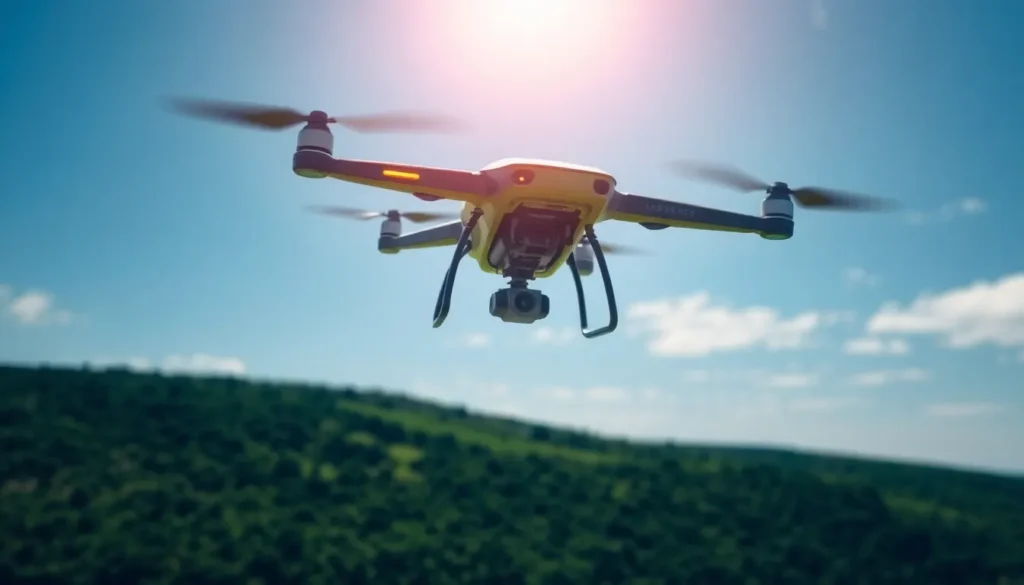

Drones have taken to the skies like kids on a sugar rush, but just how fast can these flying wonders zoom around? With speeds that could make even the fastest cheetah feel a tad sluggish, drones are redefining what it means to fly. Whether it’s delivering your favorite pizza or capturing breathtaking aerial shots, knowing their speed can help you appreciate the magic behind these high-tech gadgets.
From hobbyist models zipping through backyards to industrial drones soaring over vast landscapes, the speed varies dramatically. Some can reach impressive velocities that’ll leave you wondering if you just spotted a UFO. Buckle up as we dive into the world of drone speeds, exploring what makes them tick and how they’re changing the way we view flight.
Overview of Drone Speed
Drones exhibit varying speeds influenced by numerous factors. Understanding these elements is essential for assessing their capabilities.
Factors Influencing Drone Speed
Weight impacts how fast a drone can fly. Lighter drones generally achieve higher speeds. Aerodynamics also plays a significant role; streamlined designs minimize drag and enhance performance. Battery capacity directly affects speed, where high-capacity batteries allow for longer flight times and greater agility. Furthermore, environmental conditions like wind and temperature influence flight performance. In adverse weather, drones often face limitations, reducing their maximum speeds.
Types of Drones and Their Speeds
Drones vary in speed based on their intended use. Racing drones reach speeds up to 100 mph due to their lightweight structure and powerful motors. In contrast, consumer drones typically fly between 15 to 50 mph, with models like the DJI Phantom 4 averaging around 35 mph. Industrial drones prioritize endurance over speed, often flying at 10 to 30 mph for applications like surveying and mapping. Military drones, however, can achieve speeds approaching 70 mph, enabling effective surveillance and tactical operations. Each type meets unique requirements, leading to distinct speed capabilities.
Speed Comparison With Other Aircraft
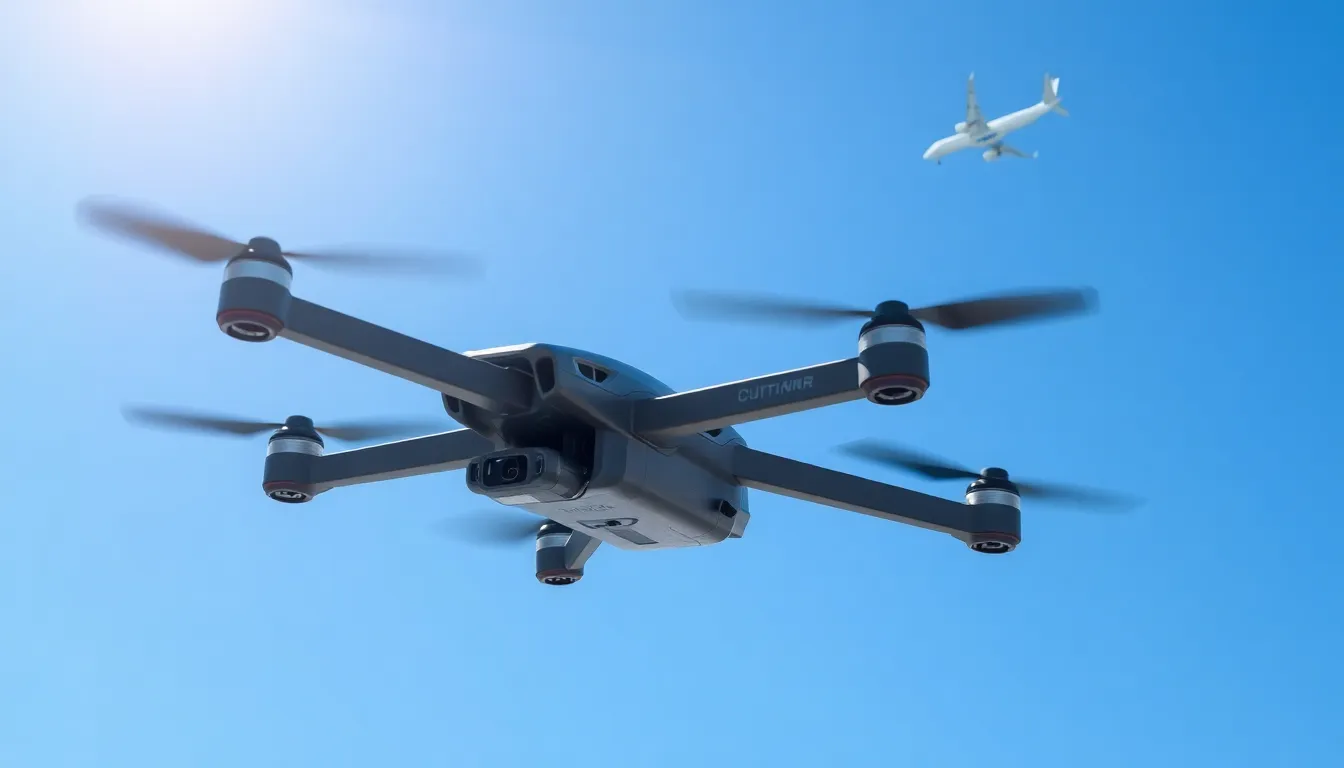
Drones showcase diverse speed ranges, especially when compared to other aircraft. Each type of aircraft serves unique purposes, affecting performance characteristics.
Drones Versus Commercial Airplanes
When considering speed, commercial airplanes significantly outpace drones. Typical cruising speeds for commercial jets hover around 500 to 600 mph. In contrast, the fastest consumer drones max out around 50 mph, while racing drones can reach speeds up to 100 mph. This disparity arises from the design and operational requirements of each aircraft. Airplanes prioritize long-distance travel efficiency, while drones cater to tasks like delivery or surveillance within local areas.
Drones Versus Helicopters
Helicopters also exhibit notable speed differences compared to drones. Most helicopters operate within a speed range of 100 to 160 mph. Drones, however, lag behind, especially consumer models that usually fly at speeds between 15 to 50 mph. Racing drones can match some helicopters’ speeds, but they lack the versatility for sustained flight. Helicopters excel in maneuverability and hover capabilities, making them suitable for various tasks that drones may not replicate effectively.
Notable High-Speed Drones
Various high-speed drones showcase impressive capabilities across different sectors. Specific types of drones reach remarkable speeds, highlighting advancements in technology.
Racing Drones
Racing drones stand out as some of the fastest unmanned aerial vehicles. These models can achieve speeds up to 100 mph, specifically designed for competitive environments. Lightweight frames and powerful motors enhance their acceleration. Additionally, streamlined designs reduce drag, enabling sharp maneuvers. Pilots use first-person view (FPV) systems for an immersive experience, allowing them to compete effectively. Events dominated by racing drones often feature intricate courses that test both speed and agility.
Military Drones
Military drones operate with impressive speed, reaching up to 70 mph. These unmanned systems serve multiple purposes including surveillance and reconnaissance. Durability and advanced technology ensure they perform effectively in challenging environments. Equipped with various sensors, military drones gather critical intelligence swiftly. Their ability to fly at higher altitudes allows for extensive coverage and detailed monitoring. Innovations in design and engineering continuously enhance the operational efficiency of these drones, maintaining their crucial role in modern defense strategies.
The Future of Drone Speed
Drones are evolving rapidly, driven by advancements in technology and engineering. Innovations continue to push the boundaries of speed and capabilities.
Innovations in Drone Technology
New materials enhance drone performance by reducing weight without sacrificing strength. Manufacturers implement powerful motors, enabling higher speeds and improved efficiency. Developments in battery technology extend flight times, allowing drones to maintain high velocities longer. Researchers explore aerodynamics, optimizing designs to reduce drag and increase stability during flight. Innovations in software provide advanced navigation and control, enabling better maneuverability at high speeds. These advancements contribute significantly to the future of drone speed, making faster and more efficient flight a reality.
Implications for Industries
Faster drones transform logistics, enabling quicker deliveries and increased efficiency in supply chains. Industries like agriculture benefit from aerial surveillance, allowing for more precise crop monitoring and management. In the construction sector, drones enhance project oversight by providing real-time, high-speed data. Emergency services utilize faster drones for rapid response, improving search and rescue operations. Furthermore, film and photography industries leverage high-speed drones to capture dynamic shots, elevating production quality. Each sector experiences operational improvements as drone speed continues to increase, influencing overall productivity and effectiveness.
The evolution of drone technology is reshaping industries and enhancing capabilities in remarkable ways. As advancements continue to push the boundaries of speed and efficiency, drones are becoming indispensable tools for various applications. Their ability to adapt and perform at higher speeds will likely lead to even greater innovations in logistics, agriculture, and emergency services.
With ongoing research and development, the future of drone flight promises to be faster and more efficient than ever before. As these flying machines gain speed and agility, they’ll change the way tasks are accomplished and redefine possibilities across multiple sectors. The journey of drone technology is just beginning, and the implications are boundless.